
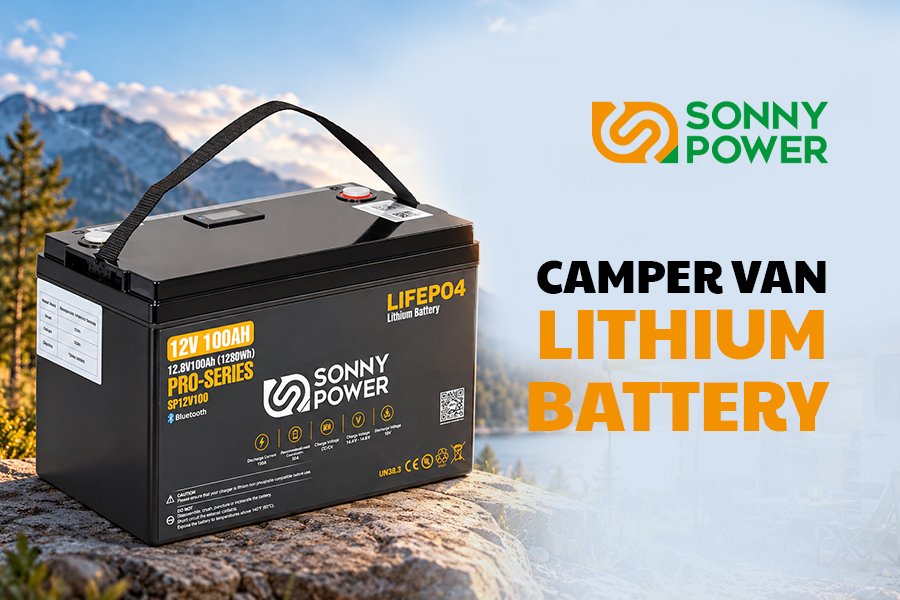
A power system is essential when you’re travelling. The right battery makes it comfortable to cook, work, and sleep off-grid, whether you’re in a small vehicle or a large one. Sonny Power manufactures reliable LiFePO4 systems for travelers, and this guide is meant to assist you in making your choice.
Camper Van Lithium Battery: What You Need to Know
Why Vans Need a Different Approach
In older conversions, the heavy lead-acid battery is replaced with a lithium battery suitable for use in camper vans. Since weight and floor space are limited in vans, each pound makes a difference. Camper van lithium batteries offer more energy in a smaller and lighter package, which leads to better fuel economy and more room for equipment. Sonny Power, a family-owned company based in Houston, offers small 12V LiFePO4 batteries.
To Look For
Lightweight, compact construction
Deep-cycle
Virtually full usable capacity
Protection circuitry built in.
Adjustable mounting
How to Choose the Best RV Battery for Campers
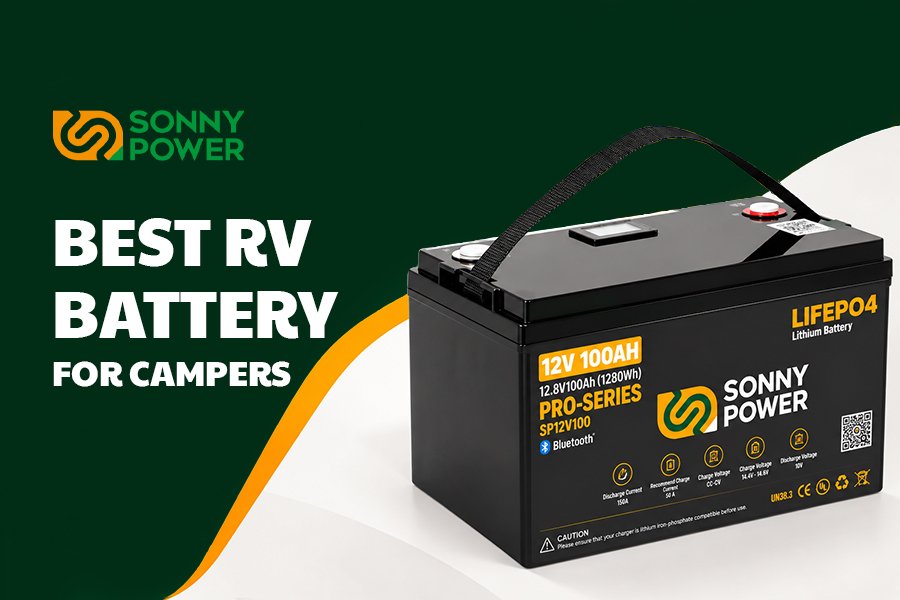
The best RV Battery for Campers should meet your daily energy requirements together with your available space and budget. Prepare a list of all the appliances you intend to use, for example, lights, refrigerators, computers, and heating fans. You must choose a battery with an adequate capacity and a good warranty since those that are unrated and cheap usually fail early and end up being more expensive.
Quick Selection Checklist
Compatible with 12V for most vans
Ampere-hour capacity
Rating for continuous discharge
Warranty and local support
Cold-weather charging protection
RV Lithium Batteries: Key Benefits
Everyday Advantages
Lithium RV batteries outperform conventional batteries in nearly every respect since they charge faster, weigh only half as much, and maintain their voltage right down to the point at which they are empty, which in turn means that the appliances keep working properly.
Zero maintenance: no watering, venting, or equalizing
Faster charging from solar, alternator, or shore power.
Lasts thousands of cycles instead of hundreds
Available capacity: deep discharges without harm
Camping Van Power for Off-Grid Travel
Building a Complete System
The full range of Camper Van Power Solutions doesn’t stop at the battery. An effective off-grid system should incorporate solar panels, a charge controller, a DC-to-DC converter, an inverter, and a large battery bank. You’ll be able to charge the battery while driving, when in the sun at camp, and when on shore where facilities are available using these components. Expandable lithium-iron batteries are good since most people start with a 100Ah battery and add additional later. Adding batteries in parallel increases capacity without replacing them. You should get lithium batteries from manufacturers with clear specs and strong after-sales service. Sonny Power offers RV power upgrades, solar options, accessories, professional installation, and countrywide assistance to ease your setup concerns.
Lithium Iron Batteries: Why They Are a Popular Choice
The Chemistry Behind the Trend
People who own vans and RVs tend to choose lithium iron batteries (LiFePO4) because of their performance, safety, and price. A vehicle that shakes and gets very hot in the summer has to use iron phosphate cells that resist overheating and remain stable when under heavy loads. These batteries have a nominal voltage of 12.8V, which means they can be used in 12V systems without the need for rewiring. Since they have a long life, lithium iron batteries are cheaper per cycle than lead-acid batteries. If you’re buying Lithium Batteries for RVs, be sure that they use Grade A cells, are equipped with a battery management system, and come with a signed warranty. Sonny Power uses LiFePO4 technology so that it can replace lead-acid battery banks with a low-maintenance solution, faster charging, and long-lasting performance without having to compromise on safety.
Battery Capacity and Power Requirements
Sizing Your Battery Bank
A 12V 100Ah LiFePO4 battery has a capacity of about 1,280 watt-hours. In order to find out what size battery bank is needed, you must first add up the daily watt-hours of all the appliances and then add 20 per cent to take into account cloudy days and the losses incurred by the inverter. A 100Ah battery is enough to power a compressor fridge, LED lighting, a phone charger and a laptop, but induction cooktops, air conditioners and espresso machines require a 200Ah battery or greater as well as a more powerful inverter; since lithium iron phosphate batteries permit deep discharges, nearly the full rated capacity can be used, whereas lead-acid batteries should be kept above 50%. A smaller lithium battery can be used instead of a larger lead-acid one. When comparing the different lithium batteries that are available, you should consider their continuous discharge rating because they must be able to safely cope with the peak load.
Provide a list of all the appliances along with the amount of time they are used each day.
Usage in watt-hours
Add a 20% safety buffer.
Choose compatible capacity and voltage.
Battery Life and Charging
Built to Last
If you compare 3,000 to 5,000 charge cycles for high-quality LiFePO4 batteries with just a few hundred for lead-acid ones, you’ll find that the batteries last for many years before needing to be replaced. Since they can handle high charge currents, a day’s driving or a number of sunny hours is enough to recharge the battery.
Charge from shore, solar, generator, or alternator
Lithium-compatible charger profile
You should only charge the battery if it has low-temperature protection and the temperature is below freezing.
Safety, Battery Management Systems
Why the BMS Matters
A battery management system is the brain of any lithium battery; it keeps an eye on the voltage, current, and temperature of the cells in order to avoid overcharging, overdischarging, short circuits, and overheating. Since you sleep close to the power source in a vehicle, this kind of protection is essential. You should always purchase batteries that are fitted with a good BMS, have secure mounting, and include fuses and wires of the correct size.
Find Reliable Lithium Batteries for Sale
Buy From a Trusted Specialist
Firms that give detailed specifications, offer warranty protection, and provide technical support tend to offer lithium batteries for sale. Sonny Power, a family-owned company based in Houston, provides 12V LiFePO4 batteries, upgrades for RV power, solar alternatives, accessories, professional installation, and service all over the country. It gives expert advice so that you only have to buy once and can buy the right product when replacing lead-acid batteries or when constructing a vehicle.
