
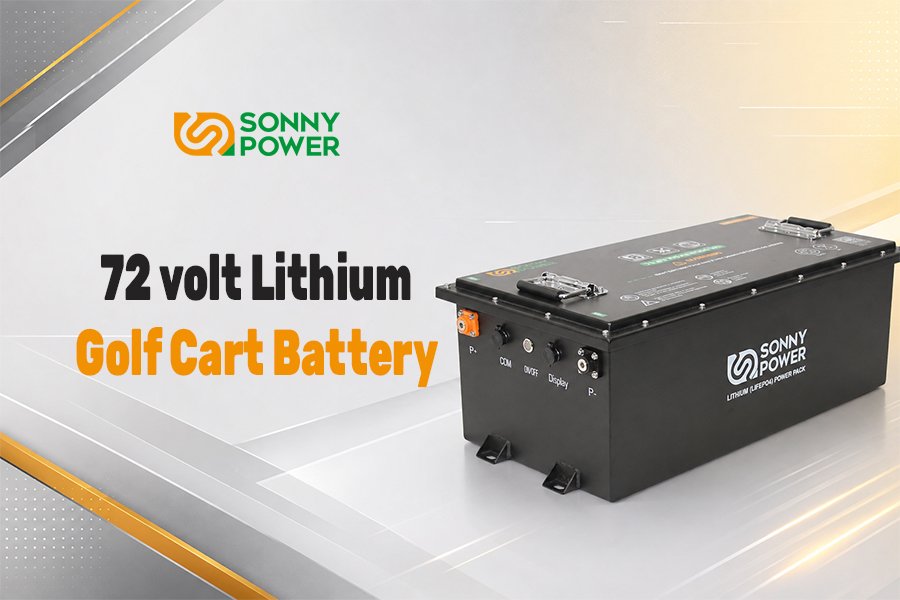
Nobody gives the same answer to this one. Ask around a cart barn, and you’ll hear five years; you’ll hear fifteen, and both people will be telling the truth about their own cart.
What changes the number is usage, climate and habits carried over from lead-acid days. The underlying figures are still useful, though, and they sit far above anything the old batteries offered.
Cycles, Not Years
Ratings come in charge cycles. A cycle means running a pack down and filling it back up, with partial use counting in fractions — half-drain it twice, and that’s one cycle, not two.
LiFePO4 packs commonly carry ratings above 3,000 cycles. Better ones push past 6,000. Flooded lead-acid tends to quit somewhere between 500 and 1,000, which is why replacement felt like a subscription rather than a purchase.
Take a cart driven four days a week. That works out to around 200 cycles annually. On that basis, a 72 volt lithium golf cart battery rated to 3,000 cycles has over a decade in it before capacity becomes an issue. Fleet carts working daily still leave real margin.
Warranty Length Tells You Something
A ten-year warranty is a manufacturer betting its own money on the chemistry lasting ten years. Spec sheets say whatever marketing wants. Warranties cost money when they’re wrong.
Read the terms anyway. Prorated or straight replacement? What voids it? Who handles a claim in year six? Anyone weighing a golf cart LiFePO4 battery against an unbranded import should price those answers in. Lifetime technical support alongside the coverage usually means a company expecting the pack to still be around later.
Heat, Cold and Where the Cart Parks
Weather takes more life out of a pack than actual use. Extended heat drives degradation, so a cart left in a Texas driveway through August won’t last as long as one kept in the shade.
LiFePO4 copes with that far better than older lithium-ion chemistries, and its resistance to thermal runaway is in a different league. Cold flips the problem — charge below freezing and cells suffer real damage. Good packs simply refuse the charge until temperatures come up, handled by the battery management system.
The BMS works constantly in the background. Balancing cells, capping current draw, cutting off before over-discharge, blocking the abuse that kills packs early. Skip that protection and a 72 volt golf cart battery won’t reach its rated life no matter what cells sit inside.
Charging a LiFePO4 Golf Cart Battery
Lead-acid taught owners things that actively hurt lithium.
Running a pack flat before recharging was poor advice then. It’s simply wrong now. Partial charging harms nothing — no memory effect exists here, so plugging in after nine holes costs nothing at all.
Store it around half charge over winter and check monthly. Leaving a LiFePO4 golf cart battery connected isn’t the hazard it used to be, though the charger has to suit the chemistry. Lead-acid units apply the wrong voltage profile, and that mismatch causes genuine harm over months.
Fast charging carries less penalty than most people assume, incidentally. The chemistry takes high current comfortably, which explains why downtime drops so sharply after a conversion.
Fading, Not Failing
Lead-acid dies abruptly. Fine on Saturday, dead by Wednesday.
Lithium fades instead. A pack at 80% of original capacity after thousands of cycles still works perfectly well — the cart just covers less ground per charge. Owners rarely notice until they ride alongside somebody with a newer setup.
That gradual slope makes planning far easier. Shrinking range warns you months ahead, rather than stranding somebody at the far end of the back nine.
Installation Quality Shows Up Later
Fitting affects lifespan more than buyers expect. Loose terminals generate heat. Undersized cable drops voltage. Skipped configuration steps leave everything working harder than necessary.
Sonny Power handles conversions across the Greater Houston area for a flat $400, with pick-up and delivery included — handy for anyone who’d rather not spend a Saturday sorting cable runs and charger matching.
Weight loss registers straight away afterwards. Hundreds of pounds gone means sharper acceleration, easier hills, and less strain on the motor and controller. Those parts last longer as a result, which nobody puts on the box.
A Realistic 72 Volt Lithium Golf Cart Battery Lifespan
Ten years is fair for a well-treated pack doing normal recreational duty. Longer in mild climates. Shorter for fleet carts working daily through serious heat.
Line that up against buying lead-acid every three or four years and the arithmetic stops being interesting — and that’s before counting the watering that stops, the corroded terminals that never show up, and the equalising charges nobody schedules anymore. Buy something with genuine warranty backing, charge it sensibly, and the question quietly shifts to whatever else the cart needs looking at.
Frequently Asked Questions
How do you maintain a golf cart LiFePO4 battery?
Barely anything. No watering, no equalising, no scraping corrosion off terminals. A golf cart LiFePO4 battery wants a terminal tightness check now and then, plus a half charge if it sits unused for months. Cell balancing happens automatically.
How can I extend the life of my LiFePO4 golf cart battery?
Don't run it flat, keep it out of direct August sun, and never charge below freezing. A LiFePO4 golf cart battery stored around half charge over winter fares best. Charger choice matters most of all.
Is a 72 volt golf cart battery safe?
This chemistry resists thermal runaway far better than older lithium-ion formats. Any 72 volt golf cart battery worth buying blocks over-discharge, over-current and freezing charge through its BMS. Certification and proper installation handle what's left.
